Kings Hill · 1939–1942
A mile and a quarter from the top of Porphyry Peak to the bottom of Bovee Slope, twelve hundred feet of drop, and speeds over fifty miles an hour — on wooden skis, in wool, with no groomed snow and no fencing. The men and women who did it, and the fifteen who passed their Red Cross examinations so somebody could bring them down.
Club Championships
Downhill, slalom and combined. Dan Thorson takes all three.
Class B: Clifford Rumford, Bob McKenna, Ed Schenk. Thorson takes both the Hubbard trophy and the Morris trophy.
A mile and a quarter, top of Porphyry Peak to the bottom of Bovee Slope. 1,225 feet of drop. Speeds over 50 mph.
Further down the same field: Charles Bovey 2:29.8 — the man the slope is named for, racing on it — and Jim Hasterlik 2:54.4, whose scrapbook is why any of this is known.
About half a mile, laid out by Virgil Newman of the Ken Syverson ski school. 23 men and 15 women entered.
Officials: Julius Peters starter, George Thomas finish judge, Bob Selzer and Leslie Peters of the Ski Patrol on first aid.
Run the same day, on the same course, and reported in the same columns.
The following March Nancy Moran took the women’s combined club championship (3:18.7) from Mary Taylor, Sigrid Fagenstrom won the women’s downhill, and Teresa McMeel won it again later that season.
The Great Falls Ski Patrol
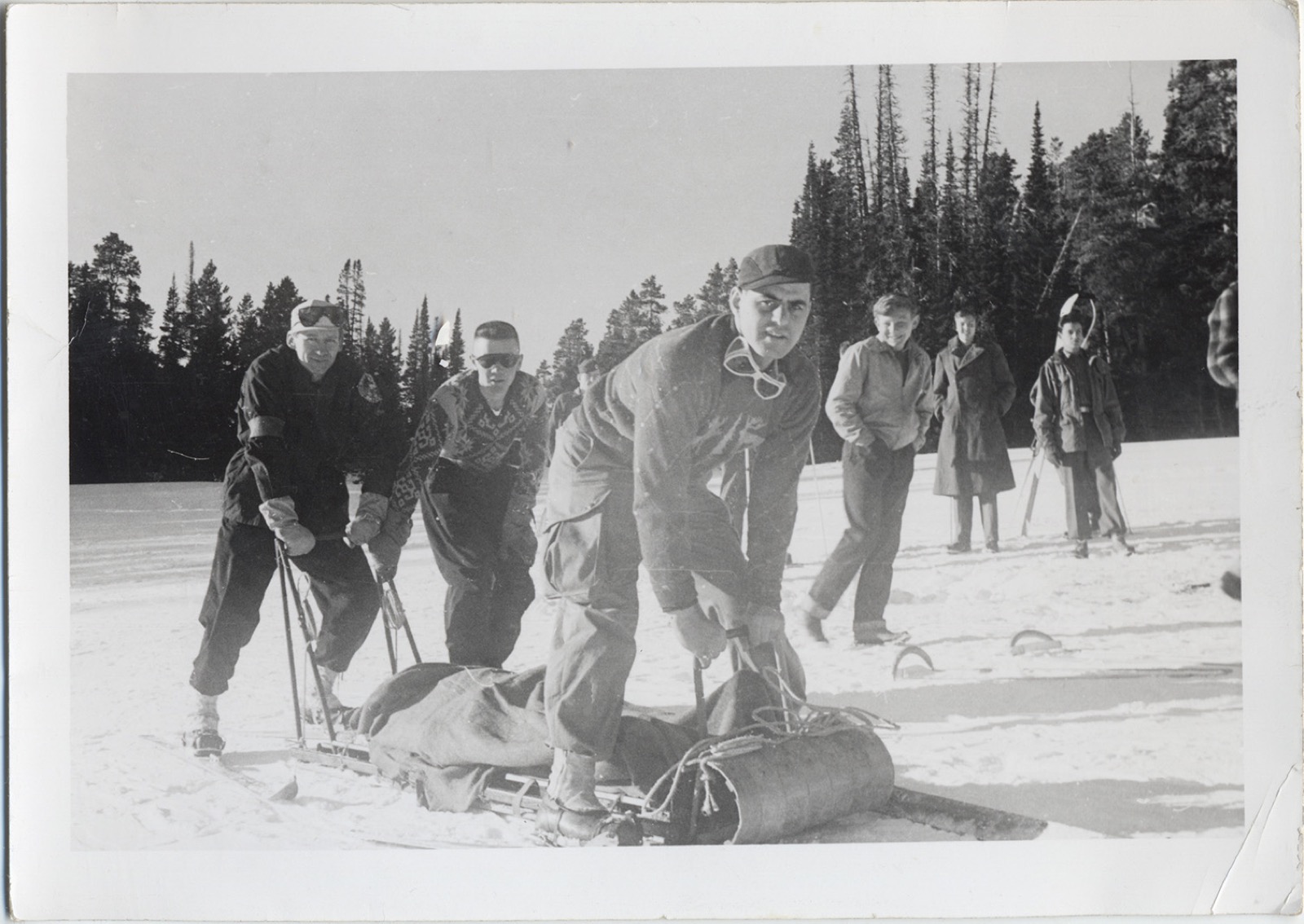
An informal patrol existed from the club’s first season — Jack Throckmorton was a founding member in the winter of 1937-38, back when “it would take five or six skiers two hours to get an injured skier to the highway,” the hardest part being wrestling the toboggan back up unpacked snow. Injuries were rare for the simple reason that skiers were rare.
In 1939 fifteen club members passed Red Cross first-aid examinations to qualify, instructed by C. V. (Clarence) Saylor. In January 1940 Dr. Charles Crago began a second course, and those who passed it became members of the National Ski Patrol.
By the spring of 1940 the patrol was formal, and it had teeth.
The U.S. Forest Service authorised the patrol to enforce safety measures on the Kings Hill course.
Contemporary clipping, c. spring 1940 · SCRAP-HASTERLIK-01
Skiers were tested and “tagged” into three ability classes, and the mountain was divided to match. The patrol could bar a skier from a run, and it could draft any skier to pack snow or assist at an accident. The lower run was reserved for novices, and the patrol gave them free instruction on it.
The patrol under Robert Selzer, c.1940:
Reorganised under Richard Voorhees, October 1941:
Where Kings Hill skiers finished
| Date | Meet | Result |
|---|---|---|
| Feb 23, 1940 | State interscholastic meet, Bozeman — team selected at Kings Hill | Jim Hasterlik, Bob Sherman, Richard Voorhees, Bob Steel, Bob Campbell; sponsor Eino Bofto. Skiing was not yet recognised by the Montana state board of control |
| Jan 5, 1941 | Selection races, Neihart course | George Savage wins both events — the mile-and-a-half downhill in 1:22.2 and the short slalom in 34.2 sec. Squad: Savage, Joe Taylor, Dan Moran, George Prentice, Bob Seltzer, Dan Thorson |
| Jan 12-13, 1941 | Montana state tryouts, Anaconda | George Savage makes the six-man Montana team for Sun Valley (264.6 pts, second overall). Great Falls place 4th of seven clubs, 904.7 pts |
| Feb 1941 | NRMSA meet, Hell Roaring course, Whitefish | George Savage second, class A downhill |
| Jun 8, 1941 | Logan Pass ski meet, Glacier Park | Campbell of Great Falls wins the men’s slalom; Voorhees third. The results list “Thorson, Los Angeles” — the club’s first champion had left Montana |
| Feb 14-15, 1942 | Montana state high school meet, Whitefish | Great Falls wins the downhill — Frank Steel 1st, Jim Hasterlik 2nd. Richard Voorhees wins the slalom. Coach George Savage |
| Apr 3-4, 1942 | First Western American Legion Junior Championships, Sun Valley | Jim Hasterlik, Richard Voorhees, Dick Petterson, Ralph Savage; coached by Bob Campbell and George Savage. The last race in the scrapbook before the war closes it |
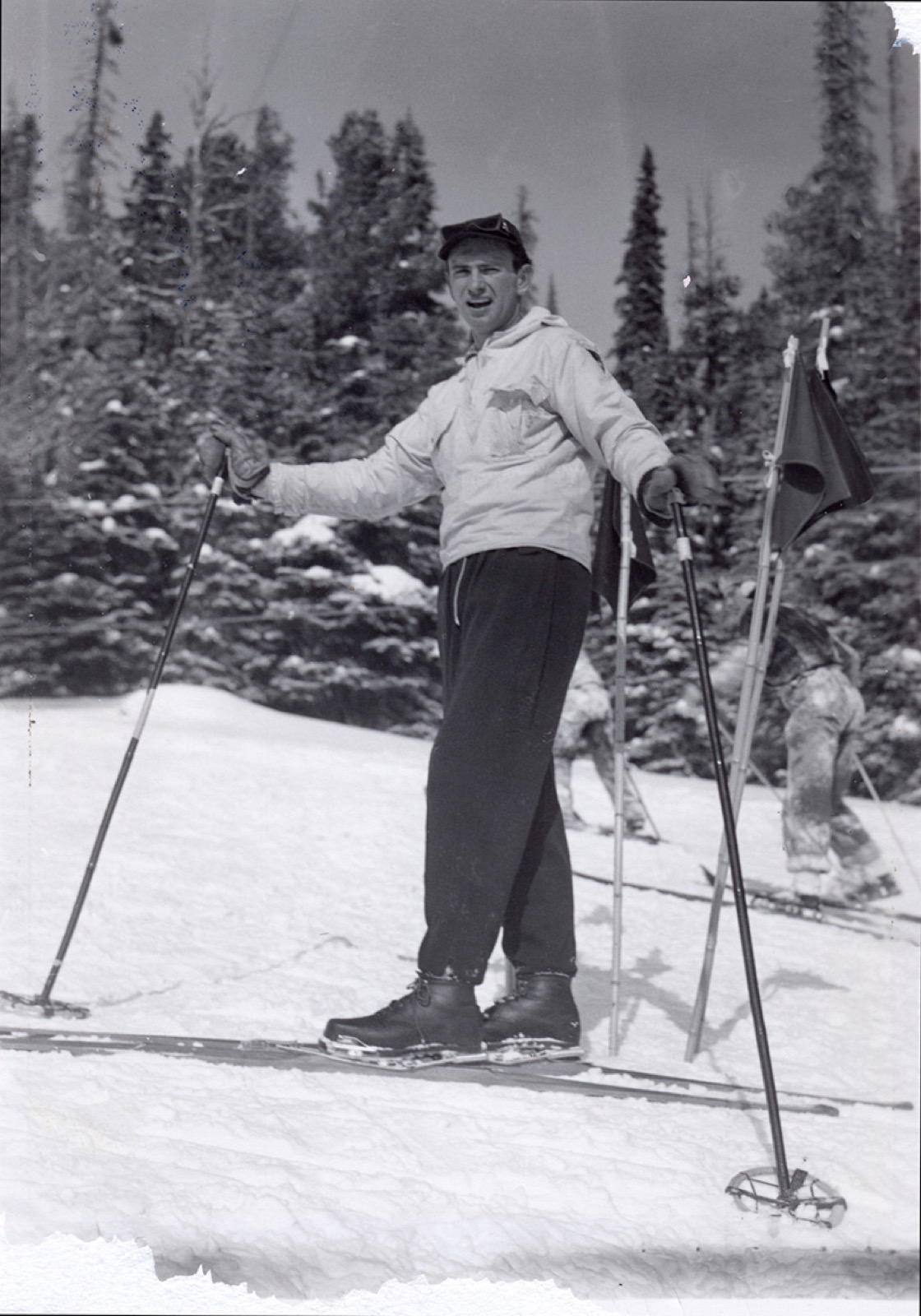
He won the club’s first championships in March 1939 — downhill, slalom and combined — took the men’s slalom at the dedication in January 1940, and won the club downhill that March by more than nine seconds. By June 1941 the results sheets were listing him as “Thorson, Los Angeles.”
In 2011 Jim Hasterlik told the Great Falls Tribune that Thorson was “one of Montana’s first casualties in World War II.”
OpenThis is not verified. It rests on a single recollection seventy years after the fact. The archive holds seven scrapbook pages of his 1939-40 victories and no record at all of his death. Confirming it — through Montana casualty lists, a Tribune death notice, or a grave — is the most emotionally significant piece of unfinished work in this project.