Organised at the Y.M.C.A. · Incorporated 1938
The Great Falls
Ski Club
A dollar a season, fifty cents if you were under eighteen
From a committee appointed to choose a name and an emblem, to two hundred members, two rope tows and a federal listing — in three winters
Then the war took the officers, and the club with them
Every ski area starts with somebody doing the paperwork. At Kings Hill it was a group of Great Falls skiers who met at the Y.M.C.A. at the end of January 1938 and elected temporary officers — Sam Stephenson Jr. president, Jim McFarland vice-president, Bill Bertsche secretary-treasurer.
Within a month the organisation was, in the newspaper’s word, “perfected.” Permanent officers were elected, the club voted to incorporate and to join the Montana State Ski Association, Lillian Willcomb took the membership drive, and a committee was appointed to do the two things every new club must: select a name and an emblem.
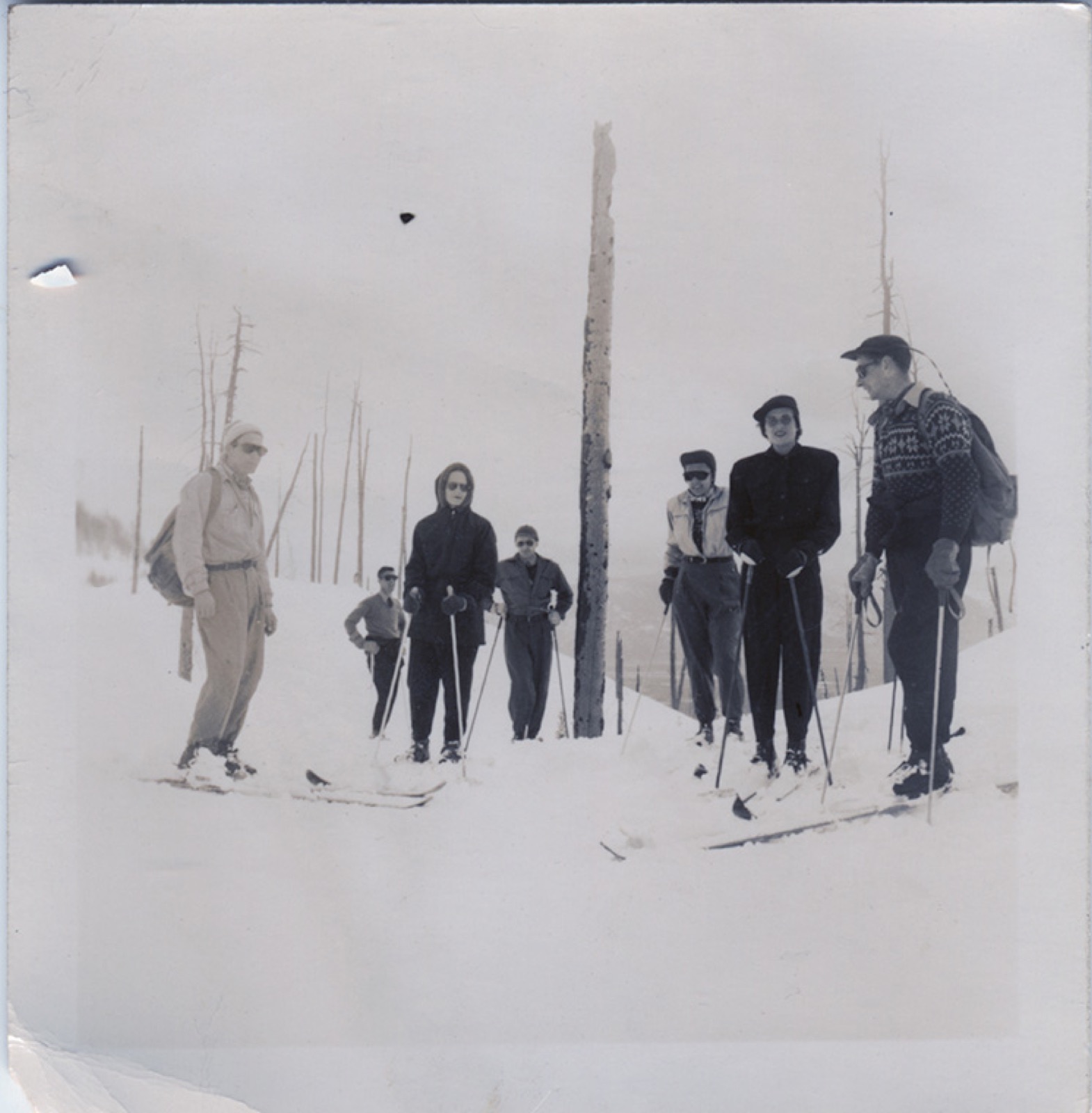
They were not, at that point, a club with a mountain. That first season they skied the gulches at Neihart, the schoolhouse hill, the Silver Dyke mine road and a fast run cut along the power-line clearing. The Civilian Conservation Corps camp on Belt Creek, eight miles beyond Monarch, was opened to them, and CCC workers built a temporary jump at the club’s request.
Dues, and what they bought
Membership was one dollar a season, fifty cents for anyone under eighteen, payable over the counter at Morris Sporting Goods. That figure tells you what kind of organisation this was: not a business with customers, a subscription with members who were also the labour force.
Schedule of charges
- Season dues, 1938
- $1.00 · 50¢ under 18
- Life membership, 1940
- $5.00 — free use of the lift all year, a club emblem, and the right to compete
- Reduced rate, 1941
- $4.00 — the club voted its dues down the autumn the war started
- Lift, 1938-39
- 50¢ a day members · $1 non-members
- High school members
- Half rates on the lift
By the autumn of 1939 the club had two hundred members. By 1940-41 it had a listing in Ski West, the U.S. Travel Bureau’s federal winter-sports publication, and a settled description of itself: “In Lewis and Clark national forest, elevation 7,500 to 8,200 feet… One hundred square miles… Four acres practice slopes. Season extends from Dec. 15 to April 15.”
The women of the club
Lillian Willcomb was secretary-treasurer from the club’s founding and signed its oldest surviving document — the notice of the September 1, 1939 meeting. She chaired the membership drive and served until she resigned in the spring of 1940, succeeded by Mrs. Robert A. Nathan Jr., who also handled the bookings for ski lessons. Jane Barker was a director from the first permanent slate.
Sigrid Fagenstrom was club secretary through the war winter of 1941-42 and won the women’s downhill championship. Constance Johnson chaired entertainment and the Skiers’ Ball. Mary Taylor was on the racing committee and was the women’s slalom champion; Helen Foster ran publicity; Helen Nolde sat on the racing committee; Mary Helen Mathieson was secretary-treasurer of the High School Ski Club.
The high school club
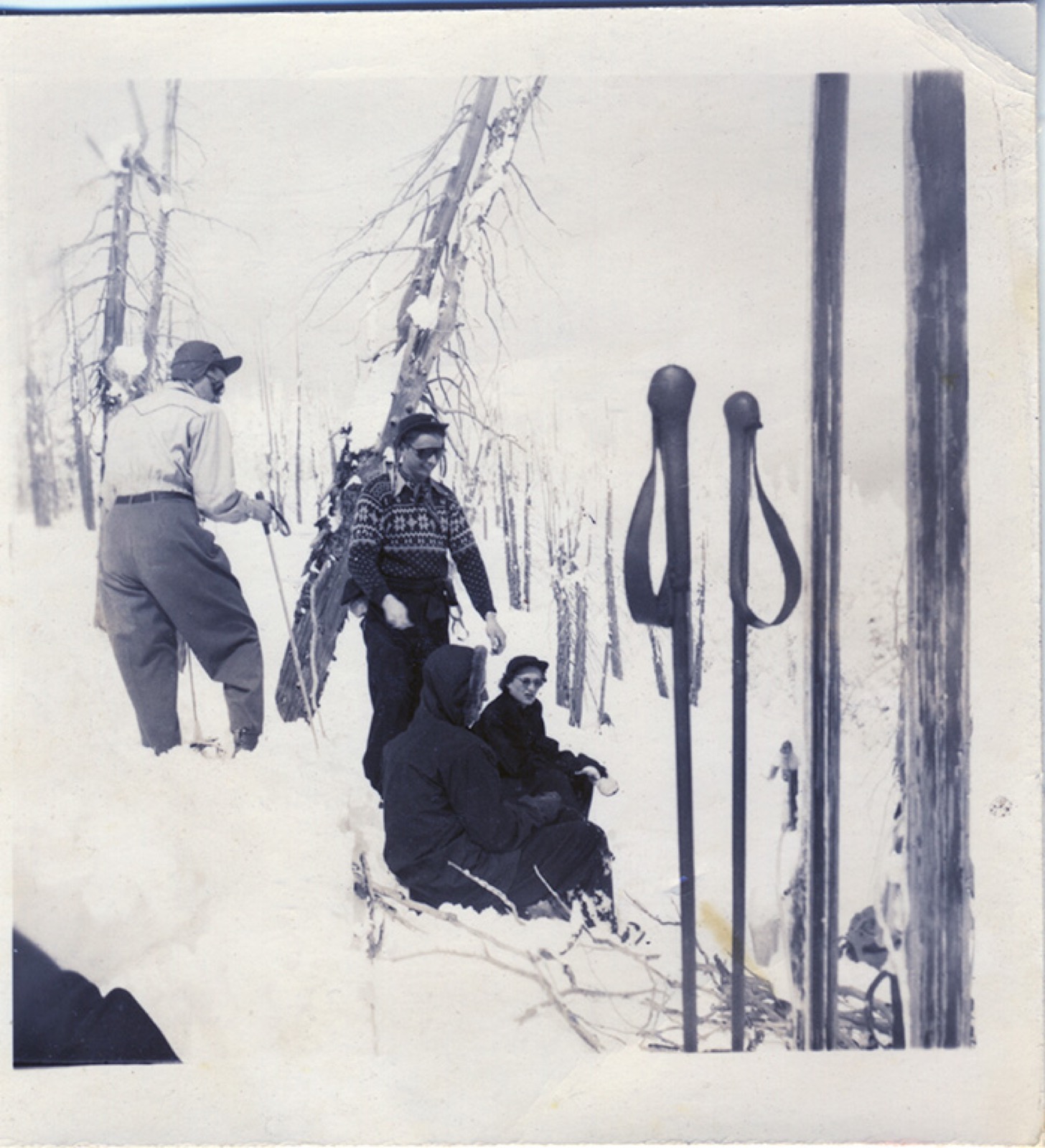
In 1938-39 — “the first year a ski club has been organized” at the school — the Great Falls High School Ski Club formed with about fifty members, Sidney D. Bachelder as adviser and Jim Hasterlik as its president. Members got half rates on the lift. The following year Jack Halseth was president, George Savage vice-president, Mary Helen Mathieson secretary-treasurer.
The arrangement between the two clubs was better than sponsorship. On March 27, 1940 the high school club operated the lifts for the day and kept all the profits. In the autumn of 1941 the whole High School Ski Club was put on lift collection under Frank Steele.
The war
In October 1941 Jack Throckmorton succeeded Alden Lohrke as president. The club lowered its dues, adopted a new membership plan, ran its own transportation system with committee members downtown every Saturday, and wrote to the state highway commission and the Forest Service urging immediate repair of the Monarch–Neihart road. It reads like an organisation with plans.
Then C. Edgar Schenck — the man who had given the dedication address, and who had been awarded the Junior Chamber of Commerce distinguished service key for his work developing skiing in Great Falls — enlisted in the First Ski Battalion of the 87th Infantry. Recruiting for the mountain troops ran through the National Ski Patrol, and it went straight through clubs like this one. In 1942 the CCC was dissolved. The scrapbook’s Kings Hill record stops.
Two of the club’s own would go on to found Big Mountain at Whitefish after the war: George Prentice and Ed Schenck. And back at Kings Hill, the man who kept the lights on was Dr. Earl Hall, refused for service as the district’s only doctor — “so for something to do in the winter, dad and some others reopened it.”
Officers of the Great Falls Ski Club
As recorded in contemporary clippings · spellings unchanged
| Season | President | Vice-President | Secretary | Treasurer | Directors & notes |
|---|---|---|---|---|---|
| Jan 1938 temporary |
Sam Stephenson Jr. | Jim McFarland | Bill Bertsche (sec.-treas.) | First meeting of the club | |
| Feb 1938 permanent |
Sam Stephenson Jr. | James McFarland | Lillian Willcomb (sec.-treas.) | F. S. Weimer · William Rice · William Kennedy · Jane Barker | |
| 1938-39 | James McFarland | — | — | — | The first tow is built. Bovey and F. Weimer head the committee |
| c.1939 | Denny Johnson | Monty Smith | Lillian Willcomb | Bob McKenna | Membership “more than 100.” The course is named Bovey’s Slope. Sever Amulet[?] director of instruction |
| 1939-40 | E. O. “Eddie” Schenck | Floyd S. Weimer | Lillian Willcomb → Mrs. Robert A. Nathan Jr., spring 1940 | Roscoe Rowe | Membership 200. The second lift; the dedication |
| 1940-41 | Alden Lohrke | — | — | Julius C. Peters Jr. | The Ski West listing. The membership card, lift button and hand-drawn map posted to every member, Nov 29 1940 |
| 1941-42 | Jack Throckmorton | Bob Campbell | Sigrid Fagenstrom | Julius Peters Jr. | Bob McKenna · George Keyser · Roscoe Rowe. Dues lowered; the war ends the era |
Sources. Jim Hasterlik’s ski scrapbook,
SCRAP-HASTERLIK-01, 52 pages
of contemporary clippings and membership receipts · Great Falls Tribune,
March 17 1988 · Great Falls Tribune, December 13 1996 · photographs
PH-SKICLUB.A design mock-up for the Showdown Montana history project. Nothing on this page was invented for effect.